
A Bangkok condo kitchen should suit the meals you actually make. Before choosing a home, picture an ordinary dinner: unpacking ingredients, washing vegetables, preparing food, cooking and clearing away. A room can look well equipped while leaving an awkward gap in that sequence. Use the viewing to identify the working space, appliance functions and extraction details that matter to your household.
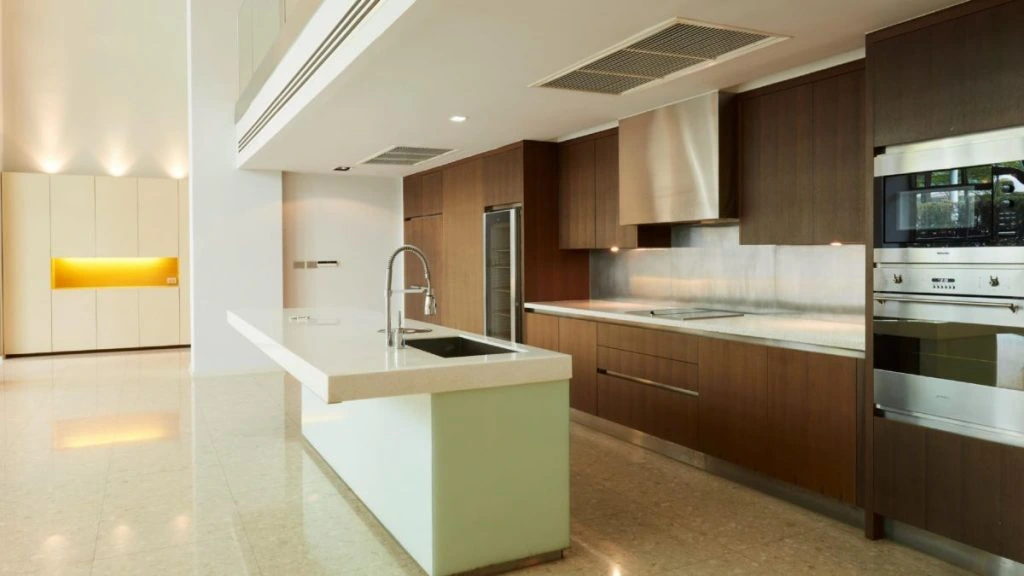
Walk through one meal from beginning to end
Choose a meal you cook regularly and describe the tasks in order. For rice and stir-fried vegetables, for example, you need somewhere to set down shopping, rinse ingredients, place the rice cooker, chop, cook and serve. Point to where each task would happen in the actual kitchen. You can do this without cooking during the appointment.
IKEA Thailand’s kitchen-planning guide groups work around preparation and cooking, washing up, and food storage. Use those categories to organise your walkthrough. The useful question is whether your sequence works in this room, including when another person takes a drink from the fridge or helps prepare dinner.
Bring these kitchen questions alongside the Bangkok condo viewing checklist. Our floor-plan guide covers the wider apartment layout; here, concentrate on the practical steps involved in making a meal.
Find the preparation space that remains usable
Identify a continuous area for your chopping board, ingredients and a bowl. Then allow for the appliances you normally leave out, such as a coffee machine or rice cooker, and the dish rack if you use one. A bare presentation worktop may conceal how much of that area your everyday equipment would occupy.
Bring the dimensions of those items and note their intended positions. Check the manufacturer’s space and ventilation requirements before assuming a small appliance can operate under a cabinet or inside a cupboard. Locate the available sockets, but leave questions about electrical capacity or changes to a qualified person.
Consider a hypothetical comparison. Kitchen A has a large island that your household would also use for dining; your chopping board would need clearing whenever someone eats. Kitchen B has a smaller island but a separate preparation stretch beside the sink. Neither arrangement automatically wins. The important difference is whether the cooking and dining tasks compete for the same surface during your normal evening.
Match the installed appliances to your cooking
List what you need the appliances to do. If you bake regularly, identify the oven model and check its functions and usable interior against your usual trays. If you cook several dishes together, compare the hob’s cooking positions with your pan sizes and the manufacturer’s instructions. Record the hob type and confirm cookware compatibility rather than inferring it from the surface.
Ask which appliances and accessories are included with the particular apartment. A built-in appliance, a portable microwave and a freestanding fridge each deserve an explicit answer. Request the model references and manuals for anything that affects your decision. A photograph cannot establish whether an appliance has the function you expect.
With permission, ask the owner or authorised representative to demonstrate normal controls. Open appliance doors and drawers to see how you would load and unload them. Keep observations separate from checks that were not performed. If something appears unsafe or needs technical assessment, stop and request the appropriate specialist.
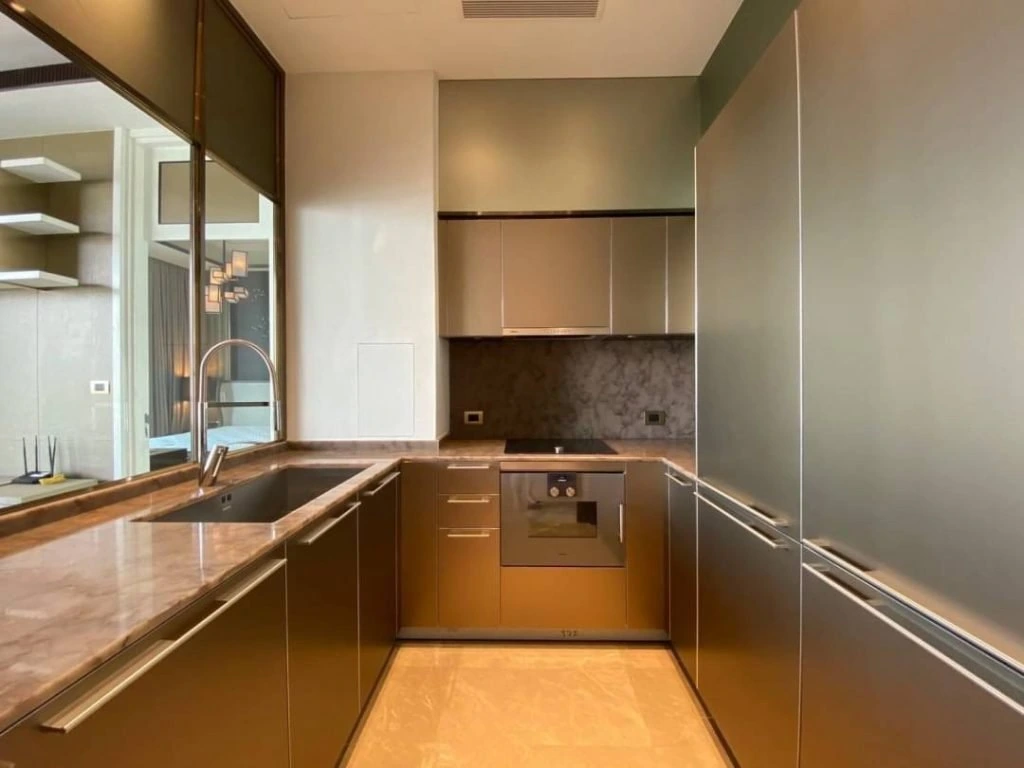
Establish where the extractor sends the air
Ask whether the installed hood discharges outside or recirculates filtered air into the room. Bosch’s explanation of hood operating modes distinguishes air sent outside through a pipe system from air returned through grease and odour filters. It is a manufacturer explanation, not confirmation of a Bangkok apartment’s installation.
Request the hood model and an explanation of its installed arrangement from the owner, management or a suitable technician. A visible chimney-shaped cover does not establish the complete duct route. Ask what filter care the model requires and what maintenance information is available. Do not assume every filter is washable or follows the same replacement schedule.
Have the representative show the normal fan settings and listen from both the cooking position and the nearby seating area. Record whether you could comfortably talk while it runs. A fan switching on does not prove extraction performance. If cooking odours or noise would be decisive, arrange appropriate follow-up before relying on the kitchen.
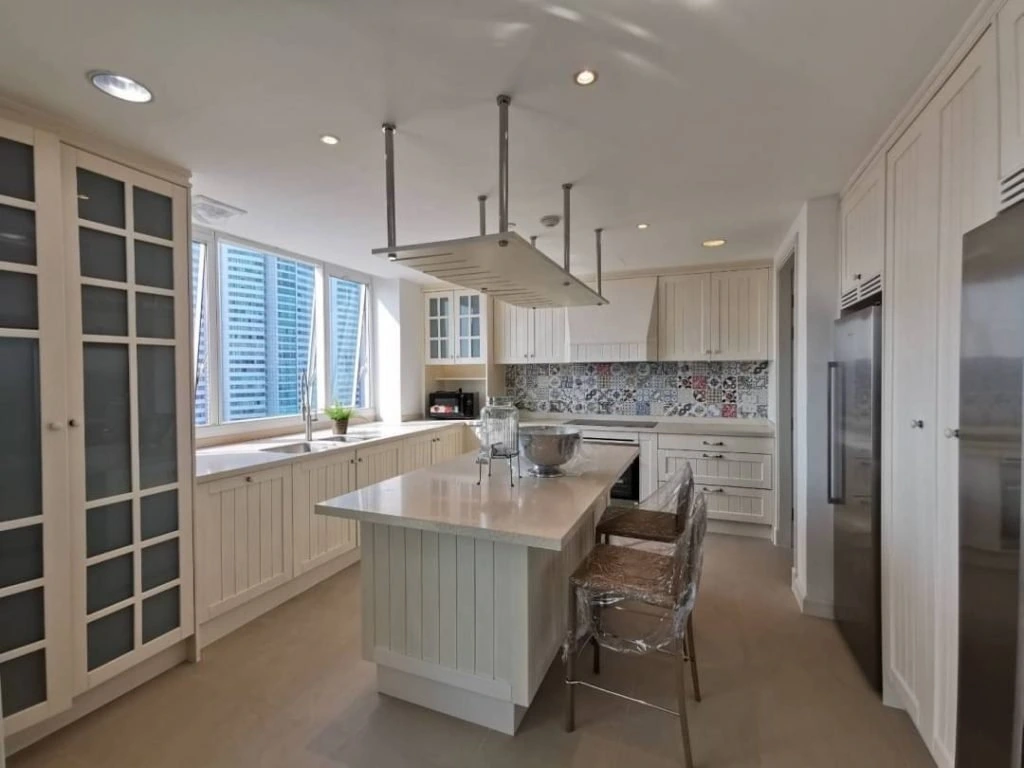
Finish the meal with washing and storage
Picture the used pans, plates and leftovers after dinner. Check whether your largest regularly used pan can be washed comfortably in the sink and where clean items would drain. If a dishwasher is supplied, look at its racks and access with permission. Confirm that the opening arrangement lets you move dishes between the machine and their intended cupboard.
Assign your everyday pans, dry ingredients, plates and small appliances to actual storage spaces. Open the relevant drawers and cupboards: shelf divisions, hinges and pipework can change what fits. Include a place for waste and cleaning supplies without sacrificing the preparation area you just identified.
Try the sequence with another household member if possible. One person clearing dishes while another puts food away can reveal a conflict that is easy to miss when inspecting each cabinet separately.
Leave with a cooking decision and specific questions
Record the meal you used, the preparation surface available after your equipment is placed, essential appliance functions and the remaining extraction question. For example: “Dinner preparation works beside the sink; oven function confirmed from manual; installed hood mode awaiting clarification.” This describes the basis for a decision without declaring the whole kitchen checked.
Explore the Teenee Property collection and request viewings with your cooking priorities. Share the appliances or worktop space you cannot do without, and ask for unit-specific information. A useful kitchen comparison connects the room you see to the meals, washing-up and daily habits you would bring into it.