
Bangkok condo shared facilities are worth comparing against the activities you would actually do there. A pool, gym and residents’ lounge may all appear on a listing, yet their usefulness depends on access, operating arrangements and the equipment or space available when you need it. Before choosing a home, work through a normal week and ask management to confirm the details that could change your decision.
Choose the activities before counting the amenities
Write down two or three things you would use regularly: swimming before work, a short strength session or meeting a visiting friend. Describe the activity precisely. Swimming lengths needs a different setting from sitting beside the water; a gym with several cardio machines may still lack the equipment used in your usual workout.
Then walk from the apartment to each relevant facility with your host. Notice the lift journey, changes of level, changing space and where you would leave your belongings. If step-free access matters, follow the entire proposed route and identify any point needing clarification. Add these observations to the Bangkok condo viewing checklist so facilities remain part of the whole-home comparison.
Match opening arrangements to your available time
Request the current operating hours and ask whether cleaning, maintenance or private bookings interrupt ordinary access. Check the days relevant to your routine. An opening time alone does not answer whether the pool is available throughout your planned session or whether a lounge becomes unavailable during events.
For a hypothetical comparison, imagine that you need to finish exercising by 7:30am. Building A’s gym opens at 7:00am, while Building B’s opens at 6:00am. Even before considering equipment, A leaves a narrower window once travel and changing are included. These are invented examples, not Bangkok opening-hour claims. Substitute management’s actual answers and your own routine.
Ask whether reservations, session limits or waiting arrangements apply. If possible, request a viewing during the period you expect to use the facility. Record what you see on that visit without assuming it represents every day. A quiet midday appointment cannot settle whether your preferred evening slot will work.
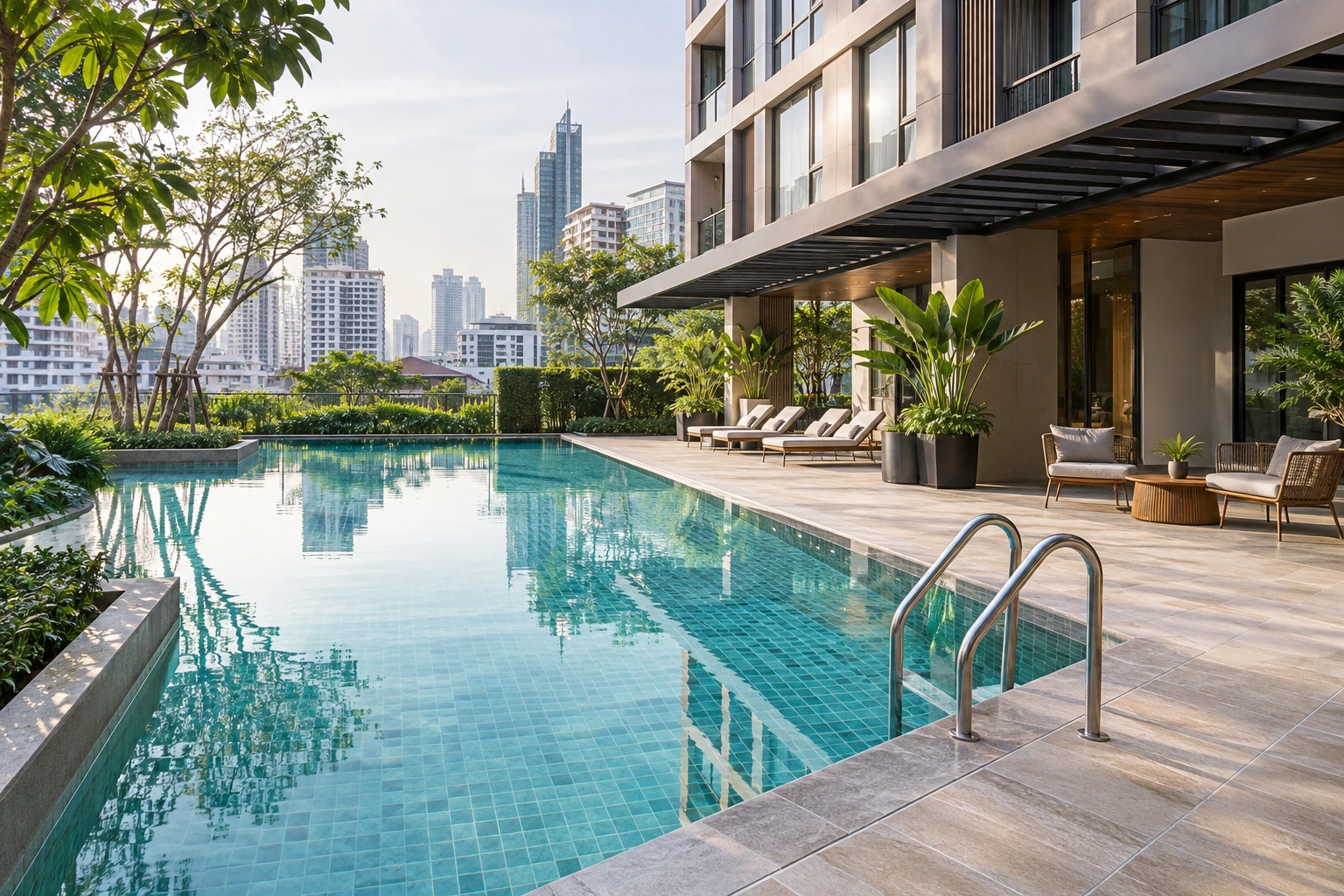
Ask pool questions beyond the photograph
At the pool, identify the entrance, changing facilities, posted rules and the area intended for your activity. Ask about depth information, any separation between different uses, and whether organised sessions restrict general access. If children will use the pool, establish the building’s accompanying-adult rules and how access is controlled when the pool is closed.
Confirm whether a lifeguard is present during the hours you would attend, and ask where emergency contact information and rescue equipment are located. The American Red Cross swimming-safety guidance calls for close, constant supervision of children even when a lifeguard is present. This is safety guidance, not a statement of Thai condominium staffing requirements.
Ask who manages pool care and what recent maintenance or water-quality records can be explained to residents. A viewing cannot certify water quality or operational safety. If a concern is unresolved, direct it to the responsible manager before relying on the facility; do not treat an attractive photograph as the answer.
Check the gym against the workout you would do
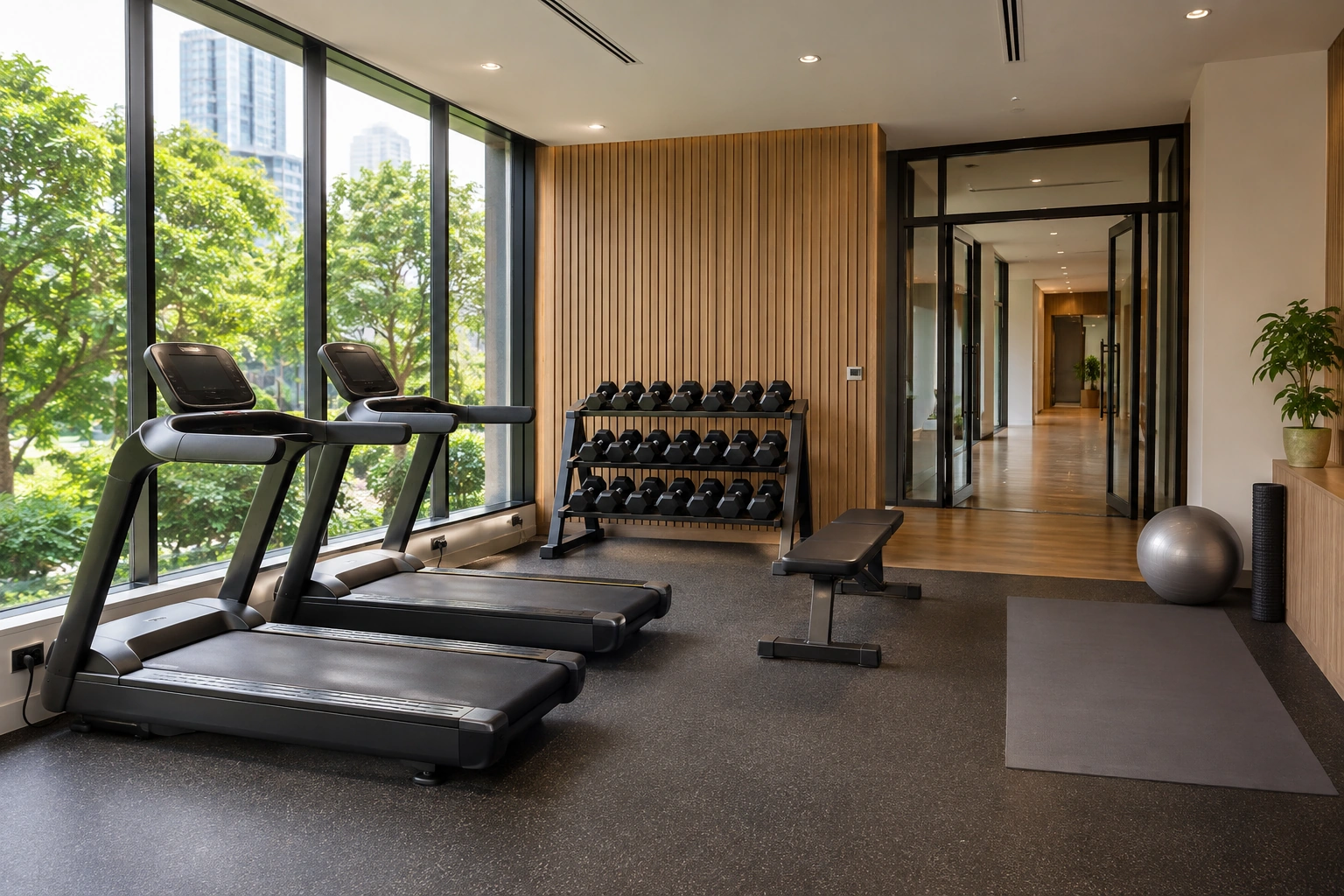
List the equipment essential to your routine and compare it with what is actually available for use. Distinguish installed machines from working machines. Notice out-of-service notices, missing accessories and whether there is suitable space for the exercises you intend to do without obstructing others.
Ask a responsible staff member to explain unfamiliar equipment and the process for reporting a fault. Do not test something marked unavailable or showing apparent damage. A viewing is an opportunity to understand the room and its management, not to diagnose or repair equipment.
Life Fitness’s UK service description explains that technicians provide reports identifying work and replacement parts needed after assessment. It offers a useful distinction for your questions: a service visit and completion of all resulting repairs are separate events. Its UK service arrangements do not establish the maintenance provision in a Bangkok building.
For an unavailable machine you would depend on, ask what remains outstanding and how residents receive updates. Keep an expected return date labelled as an estimate until operation is confirmed. Consider whether the remaining equipment would still support your routine.
Confirm who can use the lounge and bring guests
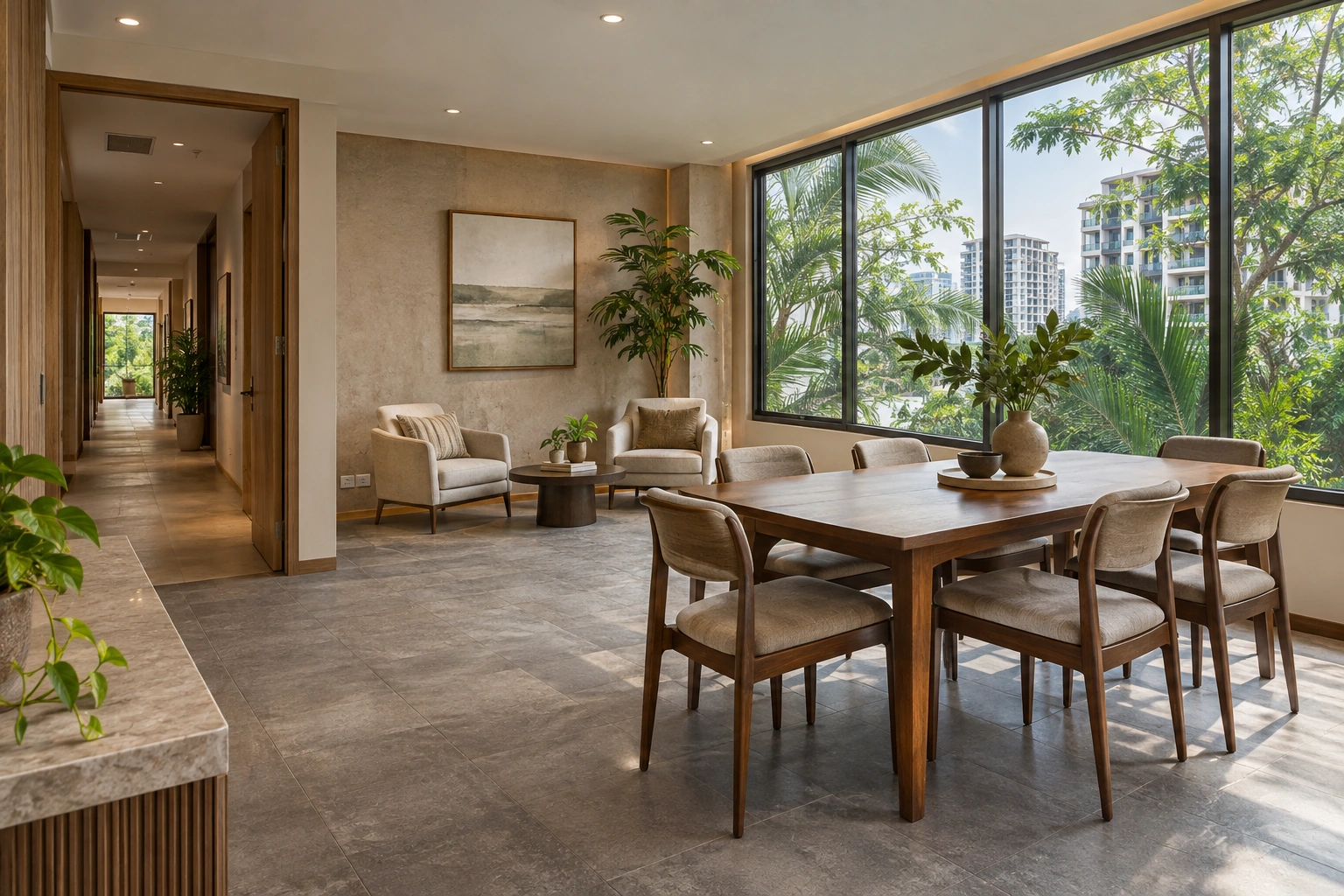
Ask which facilities your household can access under the proposed ownership or tenancy arrangement. Clarify guest registration, whether a resident must accompany visitors and whether outside instructors may enter. Get the answer for each relevant facility rather than assuming a single visitor rule covers the whole building.
For a lounge, establish whether ordinary seating remains available during reserved events. Ask about permitted activities, room bookings and any separate charges without assuming these exist. A shared room should only influence your shortlist if its rules support your intended use. At a branded residence, our guide to services and paid extras helps distinguish facility access from separately arranged services.
Compare confirmed use and unresolved interruptions
Make one short entry per essential activity: preferred period, access confirmed, necessary space or equipment, current interruption and person providing the answer. For example, “Evening cycling: access confirmed; preferred bike unavailable; repair update requested” is more useful than marking the entire gym satisfactory because the room is open.
Ask how management announces planned closures and who handles follow-up questions. Decide whether an alternative facility would meet your needs during an interruption. An uncertain amenity can remain a question on your shortlist without being counted as a dependable part of the home.
Explore the Teenee Property collection, then request viewings with your essential activities and preferred periods. Ask for the relevant management information before making facilities decisive. The strongest comparison shows what your household could realistically use and what still needs confirmation.