
Bangkok’s luxury real estate market has entered a new phase, one driven less by speculation and more by structural transformation.
While luxury property has historically been associated with prestige addresses and architectural distinction, today’s value equation is increasingly shaped by infrastructure. Transportation networks, urban planning initiatives, mixed-use districts, and lifestyle connectivity are redefining what “prime” truly means in the context of Bangkok’s evolving cityscape.
For decades, Bangkok grew organically rather than strategically. Neighborhoods developed around commercial demand, with infrastructure often lagging behind population density. That pattern has changed dramatically over the past fifteen years. Public and private investment in transportation, utilities, and urban regeneration has created a city that functions with far greater coherence. For luxury buyers, this shift has profound implications, as infrastructure directly influences convenience, privacy, environmental quality, and long-term asset performance.
From Traffic Constraints to Seamless Urban Mobility
Few factors have shaped Bangkok’s reputation as strongly as traffic. Historically, congestion limited residential desirability and placed a premium on proximity to workplaces and lifestyle centers. The expansion of mass transit systems has fundamentally altered this dynamic. BTS and MRT lines now extend deep into areas once considered peripheral, effectively redefining luxury zones by accessibility rather than geography alone.
For high-end buyers, time has become the ultimate luxury. Residences located within walking distance of mass transit now command significant premiums, not simply because of convenience, but because they offer predictability. The ability to move efficiently through the city enhances lifestyle quality and reduces daily friction, a factor increasingly prioritized by global buyers accustomed to well-connected urban environments.
Infrastructure as a Catalyst for New Luxury Districts
Infrastructure development does more than improve existing neighborhoods; it creates entirely new luxury corridors. Areas such as Thonburi, Bang Sue, and emerging riverfront zones are undergoing re-evaluation as transport, public spaces, and commercial hubs take shape. Developers are responding with projects that target discerning buyers seeking first-mover advantages in areas poised for long-term appreciation.
This transformation challenges traditional assumptions about “prime” Bangkok real estate. Rather than focusing exclusively on legacy districts, sophisticated buyers are analyzing future connectivity, zoning plans, and mixed-use potential. Infrastructure acts as both signal and safeguard, indicating where lifestyle demand and capital will flow over the next decade.
Mixed-Use Developments and the Vertical City Concept
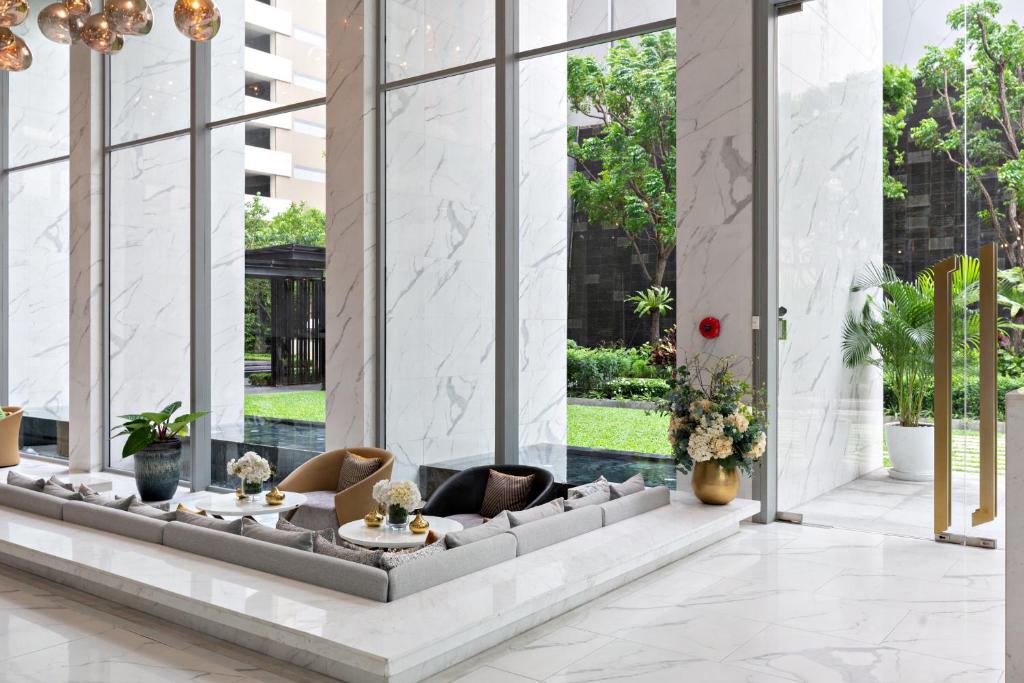
Another defining feature of Bangkok’s infrastructure boom is the rise of integrated mixed-use developments. These projects combine luxury residences with offices, retail, hotels, wellness facilities, and green spaces, effectively creating self-contained urban ecosystems. For luxury buyers, this model offers security, convenience, and insulation from the chaos of the surrounding city.
The vertical city concept aligns particularly well with Bangkok’s density. By stacking lifestyle functions within a single development, residents reduce reliance on external travel while enjoying curated environments. This model also supports stronger property values, as mixed-use projects tend to age better than standalone residential towers due to diversified demand and ongoing management investment.
Utilities, Sustainability, and Invisible Luxury
Modern luxury is as much about what buyers do not see as what they do. Infrastructure upgrades in utilities, drainage, flood prevention, and energy efficiency have become critical considerations in Bangkok, particularly given climate awareness and environmental resilience. Developments that integrate advanced infrastructure systems quietly distinguish themselves in the luxury market.
High-end buyers increasingly inquire about backup power systems, water management, air filtration, and sustainability certifications. These features may not photograph as dramatically as skyline views, but they contribute significantly to livability and long-term confidence. Infrastructure, in this sense, has become an invisible layer of luxury that separates enduring assets from short-lived trends.
Investment Confidence and Long-Term Asset Security
Infrastructure investment sends a powerful signal to investors. Government-backed transit expansions, public-private regeneration projects, and long-term urban plans reduce uncertainty and enhance predictability. For luxury property buyers, particularly international ones, this predictability underpins confidence in holding assets over extended periods.
Bangkok’s infrastructure-led evolution positions the city as a mature global market rather than a speculative emerging one. Luxury buyers increasingly assess properties not just for immediate enjoyment, but for their resilience through economic cycles. Infrastructure-backed locations consistently outperform isolated luxury developments when market conditions shift.
The most influential infrastructure factors shaping luxury real estate value today include:
• Proximity to mass transit and intermodal connectivity
• Integration within mixed-use or master-planned districts
• Quality of utilities, flood mitigation, and sustainability systems
• Long-term government and private investment alignment
Redefining Luxury Through Urban Intelligence
As Bangkok continues its transformation, luxury real estate is becoming less about exclusivity through isolation and more about intelligence through integration. Infrastructure provides the framework within which architecture, lifestyle, and investment logic converge. Buyers who understand this shift are positioning themselves ahead of the market, selecting assets aligned with how the city will function rather than how it once did.
In this new era, Bangkok’s infrastructure boom is not simply supporting luxury real estate; it is redefining its value at the most fundamental level.